
High humidity does not mean a colder drawer
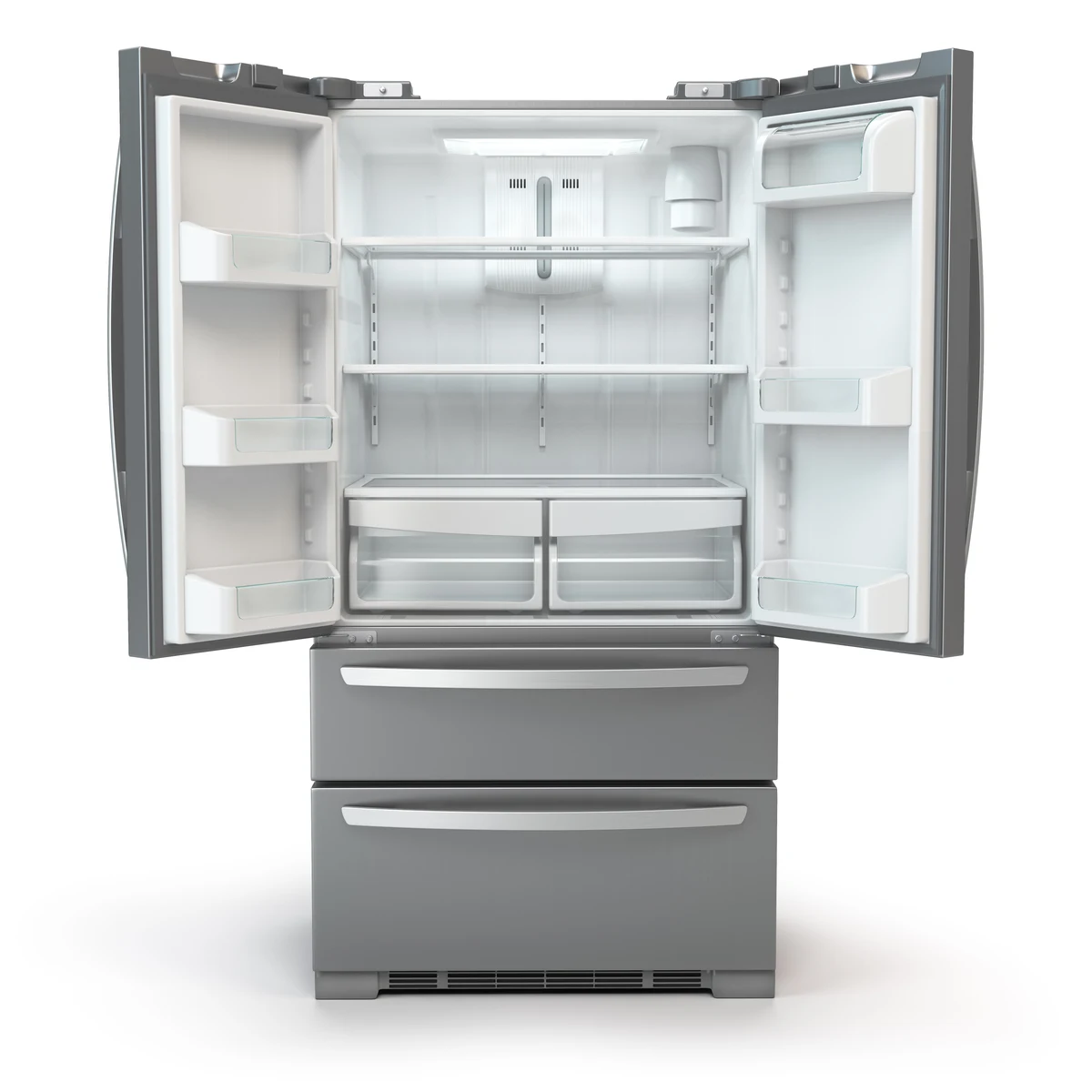
Refrigerator illustration from ApplianceGo's existing image library. It shows a generic interior, not the specific drawer controls or models discussed below.
A crisper marked HIGH and LOW can look like another temperature control. Before moving it to solve wilted produce or an unexpectedly warm refrigerator, find out what it adjusts. A humidity slider, an automatically managed produce drawer and a temperature-selectable compartment do different jobs.
The useful starting question is not which setting is best, but which kind of drawer you have. These manufacturer examples show why similar-looking compartments need different instructions.
A manual humidity slider manages moisture
In Whirlpool's crisper guidance, LOW opens the humidity control so moist air can escape, while HIGH closes it to retain moisture. For that design, Whirlpool recommends the higher-humidity setting for leafy vegetables and the lower setting for fruits and vegetables with skins. The page explicitly says the feature is not on every model.
Here, HIGH describes moisture retention, not cooling power. Read the labels and matching manual instead of assuming a slider must move left or right. A diagram for another refrigerator may put the settings in a different place. Do not turn the main refrigerator temperature down simply because the drawer's humidity setting seems unclear.
Similar drawer names can mean different controls
GE's explanation of its Climate Zone drawer distinguishes three names:
- Climate Zone: not a temperature-controlled drawer.
- Climate Controlled: allows adjustment of humidity.
- Temp Select Zone: offers temperature selections for different storage uses.
Those are distinctions in GE's documentation, not a naming rule for every brand. A similar word on a replacement drawer or an online listing does not establish your refrigerator's features. Match the complete appliance model and its manual. A drawer without separate temperature control still sits in a refrigerated compartment; it simply should not be treated as a separately selectable cooling zone.
No visible slider may be intentional
Frigidaire's crisper-setting advice identifies Auto CrispSeal drawers as having automatic humidity control, with no setting needed from the owner. That exception applies to models equipped with the named feature. It does not mean every drawer without a knob has automatic regulation.
If the manual confirms an automatic system, there is no manual HIGH or LOW position to find. If it describes an adjustable control that you cannot locate, ask the manufacturer before assuming a part is missing. Do not pry off a cover, force a slider or modify a drawer to imitate another design.
Identify the control before changing it
- Copy the visible wording. Note the drawer name, control labels and current position. Use existing paperwork or an accessible label for the model; the model-number guide explains how to identify it without moving an installed appliance.
- Find the matching manual section. Classify the drawer as manually humidity-adjustable, automatic, temperature-selectable or still unconfirmed. If the manual covers several versions, check which features actually apply to yours.
- Describe the concern separately. Wilted leaves, water collecting under a drawer and food freezing are different observations. Record where the issue occurs and any recent setting change. None of those observations alone identifies a failed component.
This small record avoids an unhelpful service description such as "the drawer is on high." It tells the recipient whether high means humidity, temperature or an unidentified marking. Keep the check brief and close the refrigerator promptly; no drawer removal or repeated adjustment is needed to identify a control.
Keep food temperature a separate check
The FDA's refrigerator guidance calls for 40 degrees Fahrenheit or below and recommends an appliance thermometer. A humidity setting is not evidence that food is cold enough. Our display and thermometer guide explains the difference between a requested temperature and a measurement.
If the refrigerator cannot maintain safe storage, protect perishable food and seek qualified help; do not wait for a humidity adjustment to fix cooling. Persistent leaking, freezing or a damaged control also needs model-specific advice, not a guessed drain or sensor repair. For ApplianceGo service, check your ZIP in the booking form; availability depends on the ZIPs currently accepted there.
Editorial note: AI-assisted article prepared for ApplianceGo using the linked Whirlpool, GE, Frigidaire and FDA resources, checked October 23, 2026. The control-identification checklist is editorial guidance, not a technician inspection or a diagnosis of your refrigerator.
