
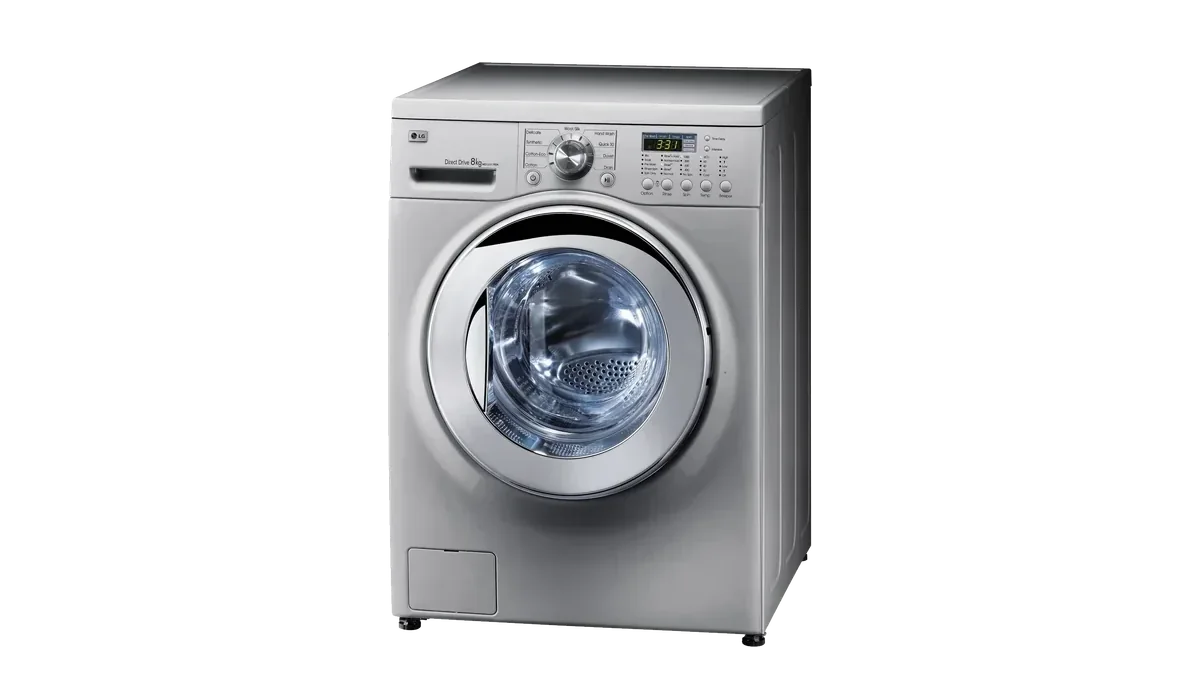
Illustration: a front-loading washer, not a photograph of a leak or a customer repair. Dispenser layouts vary by model.
A wet drawer does not always mean a fault
You finish a wash, open the detergent drawer, and find water in one compartment. Before treating that as a broken washer, separate three observations: a little water left inside the tray, a compartment still holding a substantial amount of liquid, and water escaping outside the machine.
LG's dispenser guidance says some residual water after a wash is normal. It also identifies accumulated detergent as one reason water and additives may not dispense fully. Neither finding, by itself, tells you that the washer's drain pump has failed.
This guide concerns the dispenser, not a drum full of water. If the cycle stopped with water around the clothes, report that separately. Do not open a pump filter or disconnect a hose just because the drawer is wet.
First, identify which compartment you are looking at
Read the markings on the drawer and match them to your model's manual. Note whether the liquid is in the main-wash, prewash, softener, or automatic-dosing compartment. Do not assume that a blue insert, a flower symbol, or a particular drawer position means the same thing on every washer.
A bulk detergent reservoir is a different case from a single-load cup. Whirlpool's Load & Go quick reference guide describes a reservoir that stores detergent for multiple loads. Detergent remaining there after one wash is therefore not evidence that it failed to empty. Check the correct dispenser instructions before emptying it or adding water.
Match the observation to the next step
- A small amount stays inside the tray, with no leak: compare it with the normal behavior described for your model. A bone-dry compartment is not a universal pass-or-fail test.
- A single-load compartment remains noticeably full, or product is left behind: consult the manual's dispenser-cleaning instructions and check that the removable inserts are fitted as shown. Do not assume that every visible liquid is plain water.
- Liquid spills over the drawer or runs down the cabinet: stop using the washer and arrange help. Do not run another cycle to reproduce the leak for a photograph.
Whirlpool's front-load dispenser advice distinguishes a small normal remainder from larger amounts needing cleaning. It gives a service threshold of more than half an inch remaining after cleaning and another wash. That is Whirlpool's stated guidance, not a measurement rule for every brand or drawer design.
If water is near a cord or outlet, keep clear of the wet area and do not touch the plug or appliance. Get qualified help to make the situation safe. Do not move a stacked or built-in washer to reach behind it.
Keep maintenance limited to what your manual permits
For a non-leaking washer, look up the exact drawer-removal and cleaning procedure first. Switch the washer off and disconnect power before maintenance only if the plug and surrounding area are dry and safely accessible. If access is unsafe, leave the work to a professional.
Samsung's cleaning guide describes warm-water rinsing and a soft brush for removable dispensers, but provides a separate procedure for the WF50A8800AV automatic dispenser. Use that distinction as a reminder to match instructions to your machine, not as permission to pry apart any tray.
Clean only user-removable pieces, refit them according to the manual, and avoid improvised chemical mixtures, added dilution, or tools pushed into internal passages. If the drawer will not release or an insert will not seat without force, stop. A general article cannot confirm the hidden cause of retained water.
Record the pattern instead of repeatedly testing
If there has been no leak, no electrical concern, and the manual allows normal use, note what you see after your next planned load. There is no need to run extra cycles solely to investigate. Keep this short record:
- Location: which labeled compartment; single-load cup or bulk reservoir.
- Appearance: small remainder or nearly full; clear liquid, suds, or visible product residue.
- Timing: noticed just after a completed cycle, or later while the washer was idle; include any error already displayed.
- Change: whether the same pattern returned after permitted cleaning, and whether any water escaped outside.
A photo of the stopped machine's accessible drawer can accompany those notes. Persistent excess liquid after the approved maintenance, a new overflow, or uncertainty about safe access is a reason to contact the manufacturer or a qualified service provider rather than keep experimenting.
For a model-specific request, our appliance label guide explains how to record an accessible model number. To request ApplianceGo service, check your ZIP in the booking form; the ZIPs it currently accepts determine service coverage.
Editorial note: this AI-assisted guide was prepared for ApplianceGo using the primary manufacturer resources linked above, checked October 1, 2026. It is not a technician inspection or a diagnosis of your washer.
