
Where the moisture appears matters
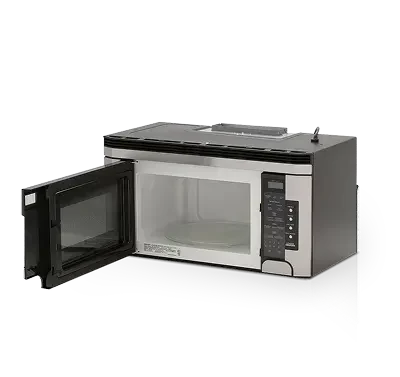
Microwave illustration from ApplianceGo's existing image library. It does not show condensation, identify a particular model or suggest operating with the door open.
A fogged microwave window after cooking does not, by itself, identify a failed door seal. First separate moisture inside the cooking cavity, droplets on the outside and mist apparently between the window panes. Note what was cooking and whether the microwave was actually in use.
GE's moisture guidance describes interior condensation during cooking, especially with foods containing plenty of water. It also explains that steam can escape around the door during normal operation. Visible moisture alone therefore cannot establish whether a door needs repair; a damaged door requires a separate response.
For a microwave above a cooktop, the moisture may come from below. Samsung's U.S. condensation guide describes steam from stovetop cooking collecting outside the microwave and sometimes reaching its interior or window layers. It recommends cookware lids and the hood vent to reduce that buildup. Use the cooking and ventilation instructions for your setup; condensation while the microwave is idle does not necessarily mean it started heating by itself.
Between the panes is not a place for a cleaning cloth
GE explains that air passes through vents between the door's window panes. For a small amount of moisture there, its guidance suggests leaving the door open for about fifteen minutes to help it clear, and arranging service if it does not evaporate within a reasonable time. That is GE guidance, not a universal countdown proving every brand is healthy or faulty.
Only consider ordinary airing after cooking has ended, with no safety warning signs and in accordance with your manual. Do not start another cycle to dry the window, separate the door layers, insert anything into a vent or apply a hair dryer. If the mist persists or keeps returning without a clear cooking connection, ask the manufacturer about your exact model.
For accessible droplets, Samsung's cleaning guidance calls for a soft cloth on the door and cautions against getting cleaning liquid into vents. Let hot surfaces cool and follow your manual's cleaning precautions. A surface wipe is different from trying to reach moisture trapped inside a door assembly.
Door damage takes priority over a condensation explanation
The FDA's microwave safety guidance says to stop using an oven whose door is bent, damaged or unable to close firmly. It also says to discontinue use if the oven continues operating with the door open. Contact the manufacturer about damaged hinges, latches or sealing surfaces.
Do not use clearing condensation as reassurance about one of those problems. Do not run a door-open test, hold a latch in position, adjust the door or remove the casing. This guide cannot establish radiation safety from a photograph, a dry window or the absence of an error message.
Keep a short moisture record for support
Instead of recreating the event, record what you already noticed. These four details help distinguish a cooking-related pattern from an unresolved problem:
Location: inside the cavity, outside the glass or apparently between layers. Mark uncertainty rather than taking the door apart to confirm it.
Activity: microwave cooking, stovetop cooking below it, both or neither. Include whether the hood vent was running during the cooking you observed.
Persistence: when you first noticed the moisture, whether it cleared after use and whether the pattern has changed. Record the actual elapsed time instead of treating fifteen minutes as a universal pass-or-fail test.
Door condition and model: note visible damage or closing difficulty without forcing the door. Obtain the model from paperwork or an accessible label; our appliance identification guide explains how to avoid moving an installed unit.
For ApplianceGo service, check your ZIP in the booking form. Availability depends on the ZIPs currently accepted there.
Editorial note: AI-assisted article prepared for ApplianceGo using the linked GE, Samsung and FDA resources, checked November 1, 2026. The moisture record is editorial guidance, not a technician inspection or a safety clearance for an individual microwave.
