
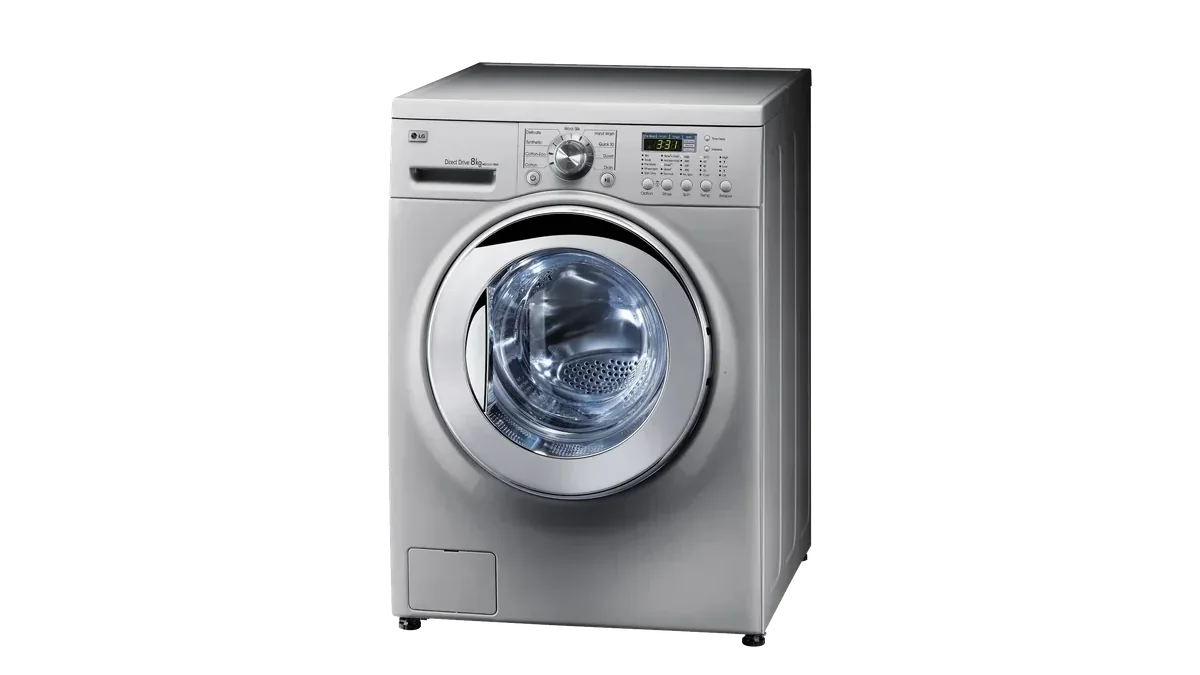
Product image from ApplianceGo's existing library. It illustrates a front-load washer, not a recorded cycle or a recommended completion time.
A remaining-time display is an estimate
The washer showed a short time remaining, but the number has stopped falling or has increased. That does not, by itself, mean the timer or control board has failed. First separate two things: the minutes shown by the washer and the actual time that has passed on a clock.
Whirlpool's front-load time-display guidance explains that the estimate depends on the load, selected cycle and options, incoming water conditions and balance detection. It can hold at one value while the machine adjusts its operation. Some models show a sensing light during recalculation.
These are explanations for a changing estimate, not proof that your particular washer is working correctly. This guide concerns front-load washing cycles, not a combined wash-and-dry program or a universal duration for every model.
Read the stage alongside the number
During a heated wash: Whirlpool's guidance on a non-advancing cycle display notes that supported Sanitize or Steam selections can require additional heating time. Incoming water temperature and the load affect that time. Record the chosen option rather than treating its duration as directly comparable with a different program.
Near the final spin: the same Whirlpool guidance describes extra time spent balancing a load, particularly a single bulky item. A number that holds near the end can therefore have a different explanation from a hold during heating. The display alone does not identify a failed motor, pump or sensor. Follow the model's loading and pause instructions; never force a locked door or reach into a moving drum.
During rinsing, with persistent foam: LG's rinse-time guidance explains that excessive detergent or a product that creates too many bubbles can prolong washing and rinsing. Check the detergent type and measured amount against the washer manual and detergent label. Do not add more detergent, another cleaning chemical or an improvised additive to make the current cycle finish.
None of these observations is a reason to pull the machine out, disconnect hoses or open a service panel. If the concern is mainly how little water you can see, the separate front-load water-level guide addresses that question. A low visible water line and a changing time estimate are not interchangeable diagnoses.
Make a timing record without restarting the wash
A useful note needs both clocks: elapsed real time and displayed time remaining. Repeatedly cancelling and restarting makes that comparison harder. Do not start extra cycles solely to reproduce a problem; record what you can observe safely during ordinary use.
At the start: write down the model, program, selected options, approximate load contents, detergent and dose, start time and first displayed estimate. Include any pause you made yourself. Use paperwork or a safely accessible label for the model number.
When the number holds or changes: record the clock time, displayed value and stage indicator. Note only visible or audible facts, such as foam behind the glass, repeated attempts to spin or an exact message. If the stage is unclear, write that rather than guessing. A safely taken display photo can preserve the wording.
At completion or interruption: note whether the cycle actually ended, when it ended and whether the laundry was unusually wet. If it did not finish, record the last observed stage and what you did next. This separates a revised estimate with a completed wash from a machine that repeatedly cannot finish.
When to stop waiting
There is no single extra-minute limit here that declares every washer healthy or faulty. Use your model's instructions, the selected program and the outcome together. A recurring failure to complete, retained water, unusually wet laundry or a repeated error deserves model-specific support, even if the display eventually changes. Preserve the message before seeking help; a generic reset is not a diagnosis.
Do not keep observing a cycle through a leak, violent shaking, smoke or a burning smell. Stop using the washer and seek qualified help. Keep away from wet plugs and outlets, and do not stand in water to disconnect power. Do not bypass the lock or use an emergency door release without the manufacturer's procedure.
For an ApplianceGo service request, bring the timing note and check your ZIP in the booking form. Coverage is determined by the ZIPs currently accepted there.
Editorial note: AI-assisted article prepared for ApplianceGo from the linked Whirlpool and LG support pages, checked October 14, 2026. The observation record is editorial guidance, not a technician inspection, customer case or model-specific diagnosis.
