
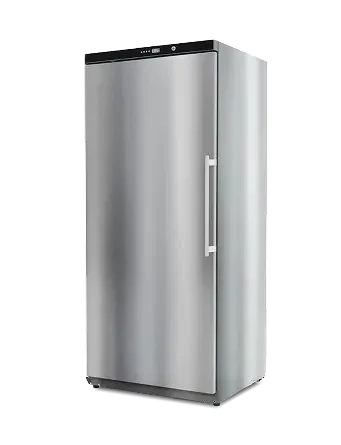
Illustration: an upright freezer from the site's existing image library, not a photograph of a customer repair.
The timing matters more than how tightly it feels shut
You close the freezer, remember one more item, and find the door unexpectedly difficult to reopen. Brief resistance immediately after closing can be a pressure effect, not a broken handle or a reason to replace the seal. A door that remains difficult to open, catches partway through its travel, or will not close needs a different assessment.
GE's refrigerator door and drawer guidance describes a temporary pressure difference after warm room air enters and the door closes. Its guidance gives about 10 to 15 seconds before the air equalizes. Whirlpool's upright-freezer guidance describes the same general effect and says to allow less than a minute for equalization.
Those are manufacturer examples, not one universal pass-or-fail time for every freezer. Release the handle and allow a brief pause instead of pulling harder. Follow your model's instructions, and do not keep opening and closing the door to recreate the effect. If it still needs force after waiting, stop and ask for help.
Easy opening after a pause is consistent with that explanation, but it does not prove the gasket is undamaged or that stored food is at a safe temperature. A temperature warning or food beginning to soften is a separate concern, not something to dismiss because the door eventually opens.
Persistent sticking calls for a visible check, not more force
When the door opens normally, look at the accessible gasket and the surface it meets. Whirlpool identifies accumulated dirt and food particles as a possible source of resistance. Its cleaning instructions use a soft cloth or sponge, warm water and mild detergent, followed by rinsing and wiping dry. Use the care instructions for your own appliance; keep cleaning to reachable surfaces.
Do not pry the gasket away, insert a tool into the gap, yank a loose handle or pull hard enough to move the cabinet. Do not remove hinges, drawer rails or covers to investigate. If you see a tear, distortion or ice holding a drawer or seal, leave the repair or model-specific defrost procedure to appropriate guidance. Do not chip ice or apply a hair dryer or heat gun.
If the problem started after installation or a reversed door swing, report that history. Whirlpool notes that incorrect reinstallation can affect alignment and sealing. It is useful context for the installer, not an instruction to adjust a loaded freezer yourself.
A door that will not close is a separate problem
Brief resistance when reopening does not explain a door left ajar. GE's door-closure guidance identifies protruding food packages, bins that are not fully closed and loose ice as possible obstructions. If the compartment opens freely, reposition an obvious movable item and close it normally. Do not slam the door against a basket or frozen obstruction.
If it will not stay closed, an edge remains visibly separated, or cooling is deteriorating, arrange help promptly rather than repeatedly waiting for pressure to equalize. Do not leave a wedge in the seal as a workaround.
Describe the pattern when requesting help
A short note can distinguish a temporary reopening effect from a mechanical catch without a force test. Record only what you have already observed:
Timing: only immediately after closing, or also after the freezer has been left alone?
Movement: resistant before the seal releases, or catching after the door or drawer starts moving?
Other signs: a visible gap, residue, frost, a damaged handle, or a temperature message. Note recent installation or door work without assuming it caused the fault.
Include the appliance type and model from paperwork or an accessible label. The model-number guide explains safe ways to collect that information. Do not force a stuck door just to reach a label.
For ApplianceGo service, check your ZIP in the booking form. Coverage is limited to the ZIPs currently accepted there.
Editorial note: this AI-assisted article was prepared for ApplianceGo using the GE and Whirlpool support pages linked above, checked October 7, 2026. No technician inspection or customer case is represented.
