
An empty tank is an observation, not a diagnosis
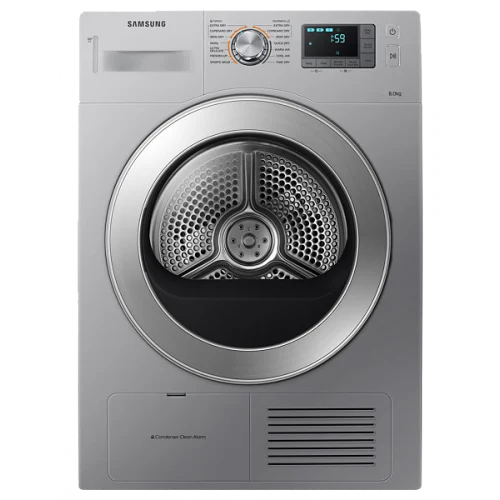
Dryer product image from ApplianceGo's existing library. The Samsung appliance pictured is illustrative; it does not show the GE or Miele models discussed below or a diagnosed water-container fault.
A ventless dryer asks you to empty its water container, yet the removable tank looks empty. Before assuming the warning is wrong, establish where the machine is supposed to send collected water. The tank's condition, the drainage setup and the exact display message are three different pieces of information.
This guide helps you record those facts without moving the dryer or opening it. It is not a pump diagnosis, a drain-installation procedure or a universal reset sequence.
Confirm where the water is supposed to go
GE's ventless-condenser drainage guide describes two arrangements: collecting condensed water in a removable tank, or sending it directly to a household drain through a hose. For the tank arrangement described there, GE calls for emptying after each drying cycle.
Check the exact model's manual and installation record to identify your arrangement. A tank being present does not, by itself, tell you which route was connected. Do not move a stacked appliance to investigate, disconnect a hose, or apply another model's drain-height measurements. If the route cannot be confirmed safely, record it as unknown.
Match the warning to the model
Miele's Empty out container guidance identifies both a full condensate container and a kinked drain hose as possible explanations. Its container procedure starts with switching the dryer off, then emptying and securely replacing the container. It recommends service if the fault persists.
That example explains why an empty tank does not settle a drainage warning. It does not prove that your hose is kinked or that any particular component has failed. Follow your own manual's accessible-container instructions, including safe handling of its weight. If the container is already empty and correctly seated, do not keep removing it or restarting the machine hoping the message will disappear.
For a connected drain, observe only what is visible without pulling the appliance out or reaching behind it. Photograph an obvious bend or visible leak from a safe position; leave inaccessible connections and changes to the installation to qualified help.
Compare the appliance display with the app
Copy both messages if they differ. Miele documents a specific app-message problem: on certain tumble dryers, the app reports an unknown fault while the appliance itself asks for the full container to be emptied. Miele directs affected owners to the appliance's container instruction.
This is a limited manufacturer example, not permission to dismiss every app alert. A different code, an empty container or another brand needs its own matching guidance. Preserve both screenshots rather than translating an unfamiliar message into a guessed fault.
Make a short water-path record
Identity: write down the dryer model and where it came from. Our model-number guide explains accessible identification without unstacking equipment.
Route: record tank collection, confirmed direct drain, or unknown. Say whether that information came from installation paperwork or a visible connection.
Warning: copy the exact words on the dryer and in the app, plus whether the cycle stopped. Do not start another load just to reproduce it.
Already observed: note whether the tank contained water, was emptied and was reseated according to its manual, and whether the warning returned afterward. Include a visible leak or recent installation change, without guessing an internal cause.
Know where the owner check ends
A warning that remains after the permitted routine check needs model-specific support. Do not bypass a level sensor, open the cabinet, probe a pump, alter drain routing or keep resetting power. Stop using the dryer if water is leaking or there are signs of an electrical problem; do not touch wet electrical connections.
A separate lint-filter message is a separate question. The filter-reminder guide does not provide a way to clear a water-container warning. For ApplianceGo service, check your ZIP in the booking form; availability depends on the ZIPs currently accepted there.
Editorial note: AI-assisted article prepared for ApplianceGo using the linked GE and Miele resources, checked October 26, 2026. The water-path record is editorial guidance, not a technician inspection, a customer case or confirmation that a specific part needs replacement.
